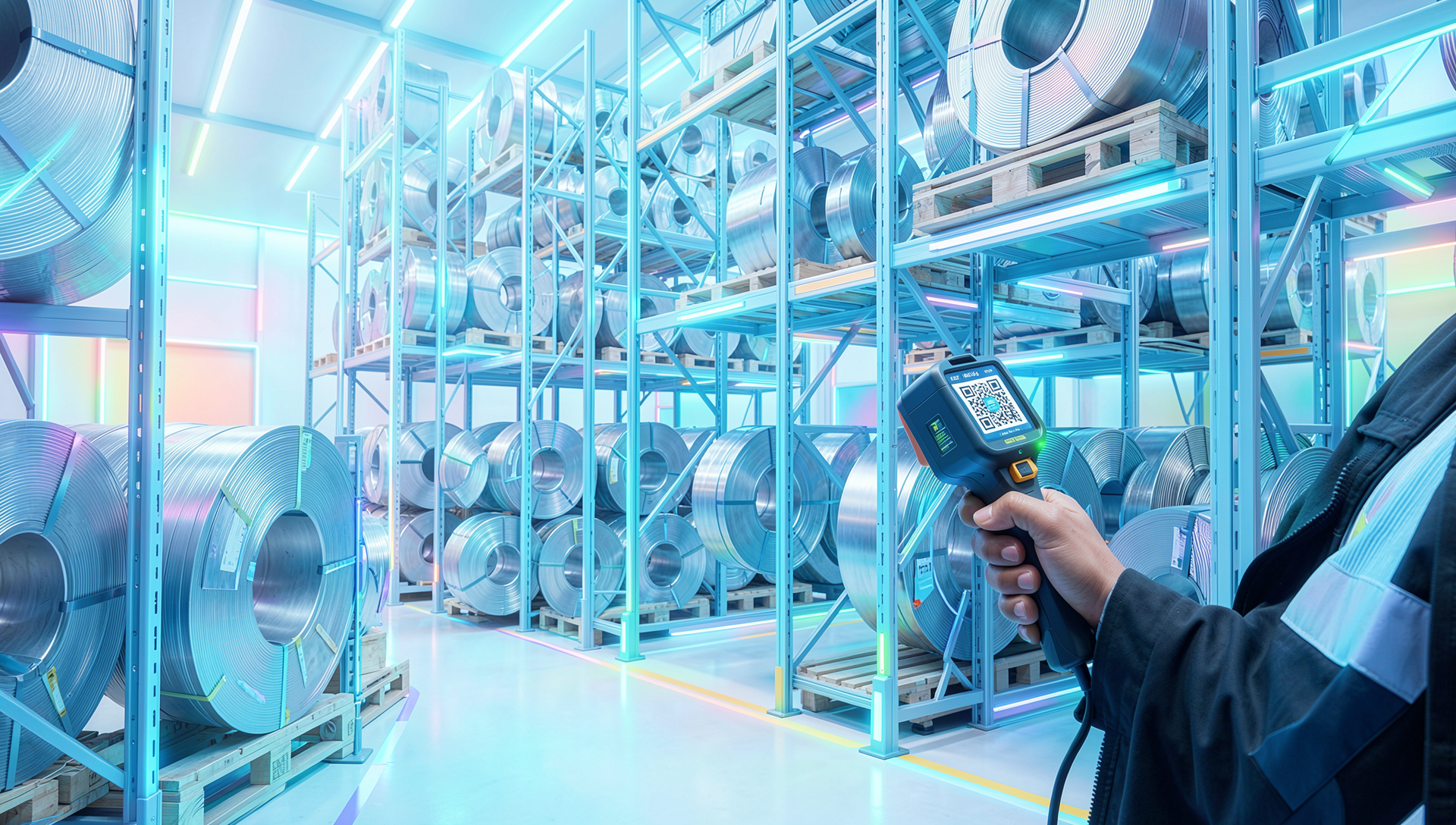
Your Steel Business Is Leaking
18–25% of Revenue — Know Why?
Most mid-size steel manufacturers in India aren’t losing money because of bad decisions — they’re losing it because they can’t see what’s happening on the shop floor until it’s too late.
If you run a steel slitting, coil processing, or pipe manufacturing business, you’re probably
juggling Tally for accounts, a bunch of Excel sheets for production, and WhatsApp for everything
else. It works — until it doesn’t. And by the time you realize something’s gone wrong, the damage
is already done.
A 2025 survey by NASSCOM and CII found that over 68% of mid-size steel manufacturers in India still rely on spreadsheets and verbal communication to manage critical operations. The result? Revenue losses of 18–25% every single year — from problems that are entirely preventable.
18–25%
Revenue lost annually to operational blind spots
68%
Mid-size steel manufacturers still using spreadsheets
3–10%
Raw material lost to untracked scrap on
average
₹2.1L Cr
Lost annually to operational inefficiency in Indian manufacturing
The Real Problems on the Shop Floor
These aren’t abstract business problems. They happen every day, across thousands of steel
processing units in India. Here’s what’s actually going on
NO REAL-TIME VISIBILITY
Production managers still walk the floor to find out where jobs are stuck. By the time a problem is spotted, hours have already been lost.
SCRAP THAT NOBODY TRACKS
Every slitting run creates trim. Every cut-to-length job creates offcuts. Without batch-level scrap tracking, those losses just get absorbed — silently — into your operating costs.
INVENTORY THAT DOESN'T MATCH REALITY
Your system says you have stock. The floor says otherwise. This leads to either overpurchasing or production stoppages — both of which cost money.
EXCEL ERRORS THAT COMPOUND
A wrong weight entry, an overwritten formula, a file that wasn’t saved — any one of these can corrupt weeks of data. And there’s no audit trail, no access control, nothing.
MACHINES THAT BREAK WITHOUT WARNING
Most SMEs fix machines after they break. Preventive maintenance alone can reduce unplanned downtime by up to 40% — but it’s impossible to implement without the right
system
“A 1% improvement in scrap yield tracking at a facility handling 5,000 tonnes/month can unlock ₹25–40 lakhs in additional revenue every year.”
— BizEnablr Industry Analysis, 2025
Why Generic ERPs Don't Cut It
SAP, Oracle, Microsoft Dynamics — these are powerful systems built for large enterprises with
big IT teams and even bigger budgets. They weren’t designed to understand the nuances of a
coil slitting line or a job work return
What a Steel-First ERPActually Needs to Do
A good ERP for steel manufacturing isn’t just an accounting tool wearing a new hat. It needs to
connect every function — from the moment a coil arrives at your gate to the second the invoice
is sent to your customer. Here’s what that looks like in practice:
PILLAR 01
Production Control — track every job, every machine, every shift
PILLAR 02
Real-Time Inventory — weight and piece count, always accurate
PILLAR 03
Scrap & Yield Tracking — at the job level, automatically
PILLAR 04
Production Control — track every job, every machine, every shift
PILLAR 05
Quality Control — photo evidence, supplier debit notes, job work checks
PILLAR 06
Native Tally Integration — no double entry, GSTready
PILLAR 07
WhatsApp Sharing — invoices, delivery notes, QC reports, one tap
Two of these pillars deserve special mention for Indian businesses specifically. Tally is the
accounting backbone of over 7 million Indian businesses — any ERP that forces you to replace it
or run parallel data entry is already a problem. And WhatsApp isn’t just a messaging app; it’s the
primary channel for B2B invoicing and payment follow-up in the steel trade. An ERP that can’t
send a delivery note via WhatsApp will simply get bypassed.
What Businesses Are Actually Seeing After Deployment
Across real deployments in slitting, cut-to-length, and job work businesses, the numbers speak
for themselves:
91%
Reduction in manual stock discrepancy incidents
5-6 Wks
Average go-live time from
contract to full operation
₹20–35L
Estimated annual scrap recovery per facility
The Bottom Line
India’s steel processing market is growing at over 9% a year and is expected to hit $178.5 billion by 2031. That’s an enormous opportunity — but only for businesses that are operationally tight enough to capture it.
The companies that will come out ahead aren’t necessarily the ones with the best machines or the lowest raw material costs. They’re the ones that can see everything happening in their business in real time, fix problems before they become losses, and make decisions based on data — not guesswork.
If your business is still running on spreadsheets, the question isn’t whether you’re losing money. It’s how much — and how long you can afford to keep losing it
Get the full white paper Download access: